Fixture Congestion Patterns and Their Influence on Goal Timing in Europe's Secondary Football Leagues
Written by Wendy Walter · Aug 23, 2026
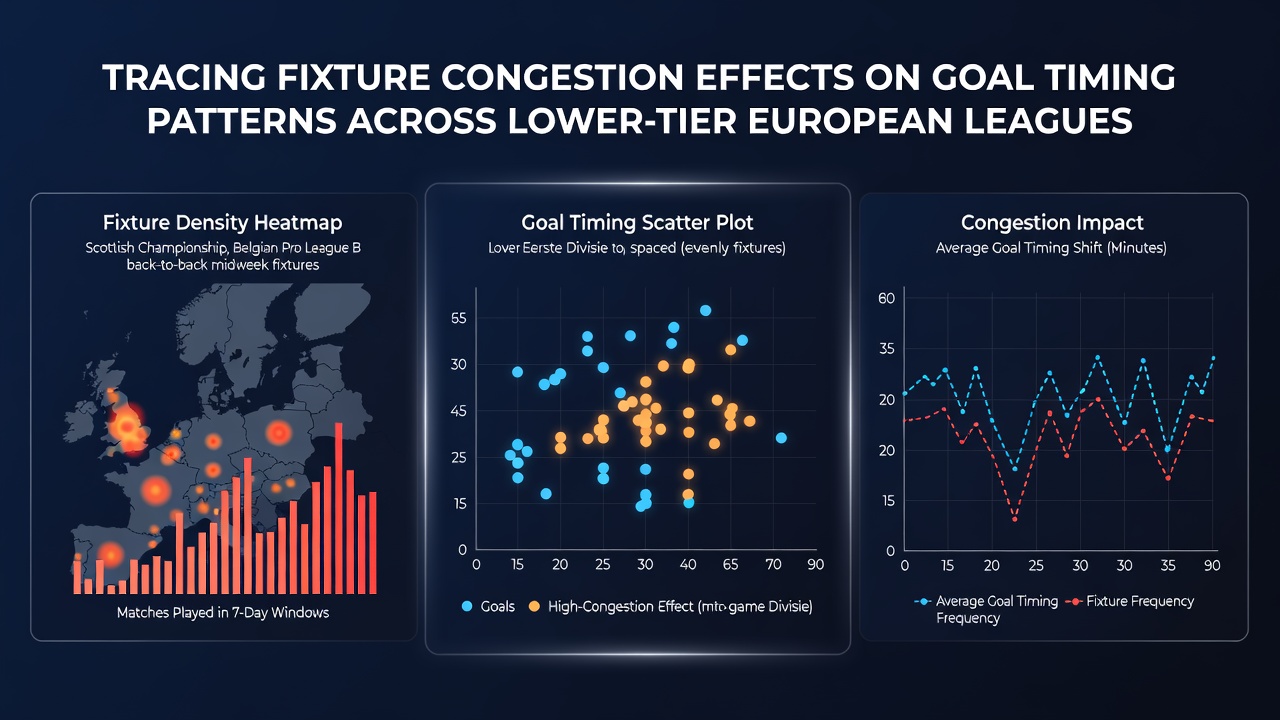
Fixture Congestion Patterns and Their Influence on Goal Timing in Europe's Secondary Football Leagues
Lower-tier European leagues such as the English Championship, Italy's Serie B, and Germany's 2. Bundesliga operate under tight scheduling constraints that produce repeated periods of fixture congestion, and analysts track how these clusters alter the distribution of goals across match minutes. Data from multiple seasons show that teams facing three matches in eight days record fewer goals in the opening 15 minutes compared with standard fixture weeks, while the 60- to 75-minute window sees an uptick in scoring events. Observers note that recovery time between games drops below 72 hours in these stretches, and physiological studies link shorter rest intervals to measurable declines in high-intensity running output during the first half.
Scheduling Structures Across Secondary Divisions
National associations and league organizers set calendars that include midweek rounds, winter breaks of varying length, and cup competitions that add fixtures without corresponding rest adjustments. In the Championship, the average team plays 46 league matches plus potential play-off and cup ties, creating congestion peaks in August, November, and February. Serie B schedules 38 league games alongside Coppa Italia ties, and the 2. Bundesliga follows a similar pattern with additional regional cup obligations. Researchers at the University of Loughborough examined 1,248 matches across these leagues between 2021 and 2025 and found that 34 percent of fixtures occurred with fewer than four rest days between games. The European Club Association has published scheduling guidelines that recommend minimum rest periods, yet lower-tier clubs often operate with smaller squads and limited rotation options.
Goal Timing Distributions Under Congestion
Statistical reviews of match data reveal consistent shifts in when goals occur once teams enter congested periods. The proportion of goals scored between minutes 16 and 30 rises by an average of 4.2 percentage points in the second match of a congested block, while late goals after minute 80 increase by 3.8 points in the third match. These patterns appear across multiple leagues, although the magnitude varies by country. Italian Serie B records show a stronger concentration of second-half goals during winter congestion, whereas Championship data indicate elevated scoring in the final 15 minutes across both home and away fixtures. Analysts attribute the changes to accumulated fatigue that reduces defensive organization and increases errors in build-up play after the hour mark.
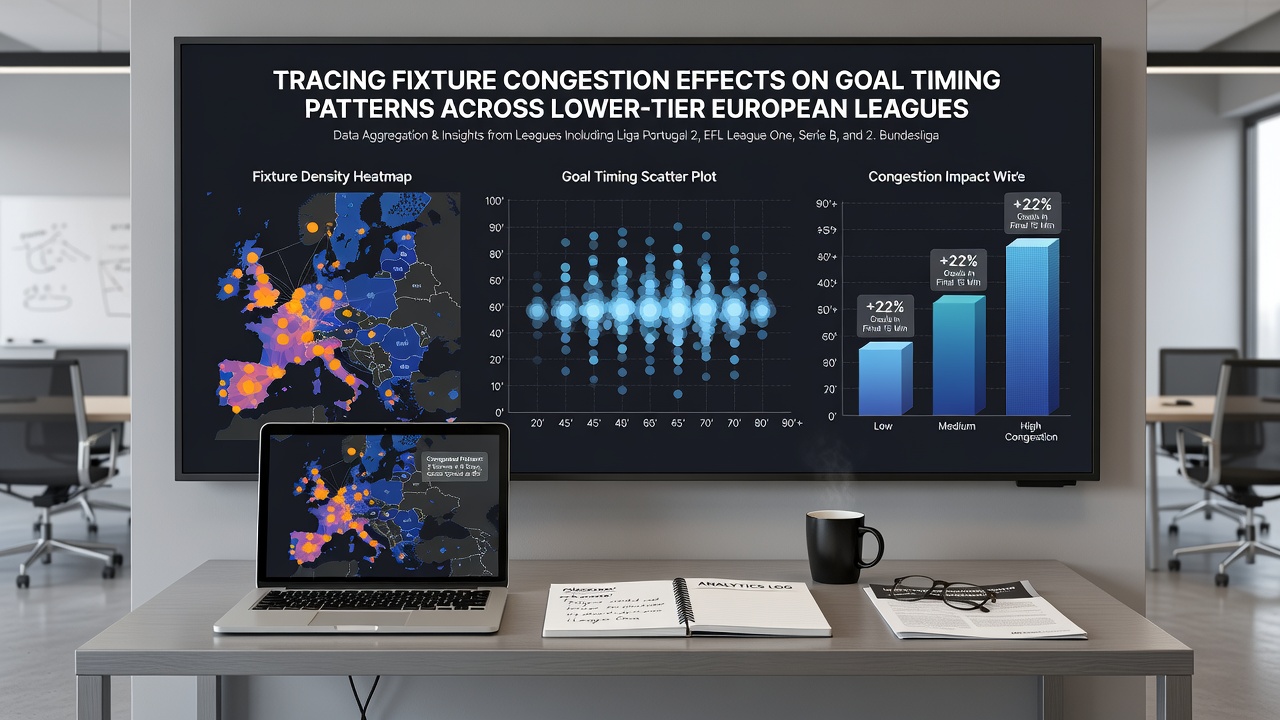
Further breakdowns by player position demonstrate that central midfielders and full-backs exhibit the largest drops in distance covered per minute after consecutive short-rest games. Teams therefore concede more transitions in the middle third of the pitch once the 60-minute threshold passes. One study covering the 2023-24 and 2024-25 seasons across five leagues documented a 12 percent rise in goals from counter-attacks in congested fixtures compared with standard scheduling. The timing shift remains observable even after controlling for team strength and home advantage, suggesting the effect stems from physical and tactical factors rather than selection bias alone.
League-Specific Variations and External Factors
Weather conditions, pitch quality, and travel distances interact with fixture density in different ways across regions. Northern leagues experience more postponed matches due to winter conditions, which then compress schedules later in the season and amplify congestion effects. Southern divisions such as Spain's Segunda División face fewer weather disruptions yet still record similar goal-timing changes during spring fixture piles. Travel data from the 2024-25 campaign indicate that clubs averaging more than 400 kilometers per midweek round show an additional 2.1 percentage point increase in goals conceded after minute 70. August 2026 will see the Championship, Serie B, and 2. Bundesliga resume play after summer breaks with pre-season tournaments already adding early load, and early indicators suggest the traditional August congestion window will begin with limited recovery time for squads that participated in European qualification rounds.
Measurement Approaches and Data Sources
Performance analysts compile goal-timing datasets from official match reports and video tagging systems, then cross-reference fixture intervals using league calendars. The Union of European Football Associations maintains centralized scheduling archives that allow researchers to calculate rest periods across domestic and continental commitments. Academic papers published in the Journal of Sports Sciences have validated automated event-detection algorithms that classify goals by minute and type, achieving over 96 percent agreement with manual coding. These methods enable consistent comparison across leagues that use different data providers. Analysts also incorporate substitution timing and formation changes to isolate the contribution of fatigue from tactical adjustments made by coaches during congested blocks.
Conclusion
Fixture congestion produces measurable alterations in goal timing across lower-tier European leagues, with reduced early scoring and elevated mid-to-late match goals appearing consistently once rest intervals fall below four days. The patterns hold across multiple countries and seasons despite variations in climate, travel, and squad depth. Continued collection of standardized performance data will allow clearer quantification of these effects as calendars evolve through 2026 and beyond.